
Potential Moisture-Affected Insulation
Thermal anomalies may help identify areas of suitable flat roofing systems where moisture-affected insulation is suspected and further investigation may be appropriate.

Investigate roofing conditions beyond conventional visual inspection. Infrared thermal imaging can reveal temperature anomalies that may indicate moisture-affected insulation, heat loss and other roofing performance concerns under suitable inspection conditions.
Conventional roof inspections are an important part of understanding roof condition, but some roofing concerns are not immediately visible in ordinary photographs.
Moisture within a roofing system, differences in insulation performance and variations in heat transfer can produce temperature patterns across a roof surface.
Infrared thermography uses specialist imaging equipment to observe apparent surface temperature differences and identify areas that may warrant further investigation.
When combined with roofing knowledge, conventional photography and appropriate follow-up assessment, thermal imaging can provide valuable information to support maintenance and refurbishment decisions.
Elite Waterproofing's approach considers the roof construction, building use and reported concerns before establishing whether thermal inspection is a suitable method of investigation.
Discuss Your Roofing Concerns
A thermal camera detects infrared radiation emitted and reflected by surfaces, converting the recorded information into a visual representation of apparent surface temperature.
Different roofing materials absorb, retain and release heat in different ways. Moisture-affected insulation may exhibit different thermal behaviour from surrounding dry insulation.
In suitable warm-deck flat roofing systems, these differences can become apparent during the cooling period after daytime solar heating.
A thermal survey may therefore identify areas that retain heat differently from the surrounding roof, helping establish locations that require closer investigation.
Thermal imagery must be interpreted with consideration of roof construction, material emissivity, reflected radiation, weather conditions and other factors that affect the recorded temperature patterns.
Thermal imaging can support several types of roofing investigation, depending on the construction of the building, the inspection conditions and the information required.
Thermal anomalies may help identify areas of suitable flat roofing systems where moisture-affected insulation is suspected and further investigation may be appropriate.
Apparent surface temperature differences may indicate variations in heat transfer associated with insulation, construction details or other building characteristics.
Under appropriate internal and external temperature conditions, thermal imaging may support investigation of unusual heat transfer through roofing systems.
Thermal findings can assist the wider investigation of recurring roof leaks by identifying areas that warrant targeted visual inspection or moisture assessment.
Differences around roof junctions, penetrations, structural details and previous repair areas may indicate conditions requiring closer examination.
Thermal survey information may assist the assessment of whether further testing, targeted repairs or more extensive roof refurbishment should be considered.
Conventional aerial photography and infrared thermography provide different types of information. Combining the two can support a more informed roof investigation.
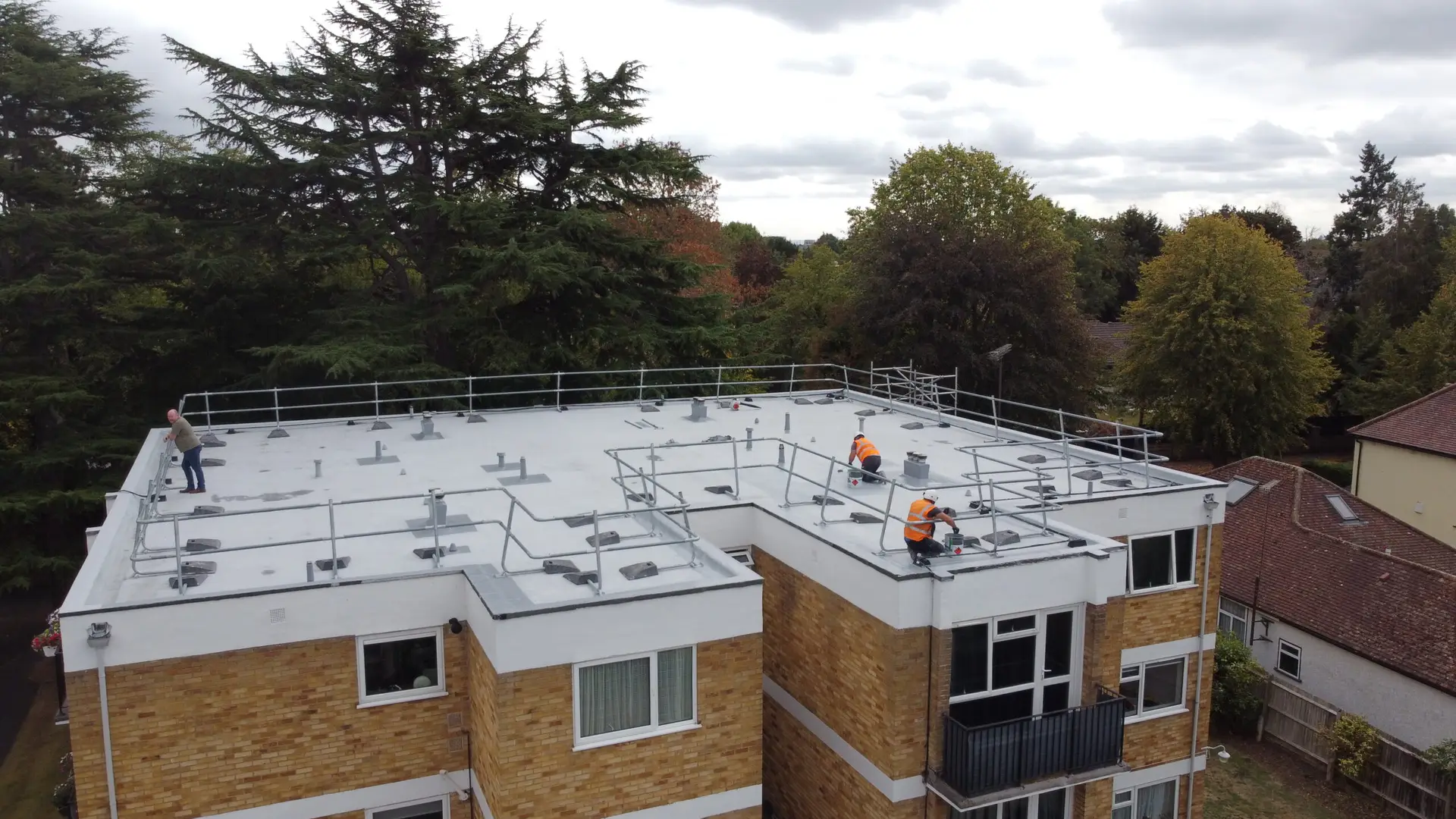 Visual Inspection
Visible-light photographs document the appearance and observable condition of roofing materials and associated components.
Thermal Inspection
Infrared cameras record apparent surface temperature patterns, providing additional information that cannot be obtained from visual imagery alone.
Understanding the imagery: The photographs above illustrate different inspection methods and are not a matched visual and thermal comparison of the same property. Thermal images require appropriate interpretation and do not directly show the contents of concealed roofing layers.
The effectiveness of thermal imaging varies significantly depending on the design, materials and construction of the roof being inspected.
Certain warm-deck flat roofs, where insulation is located above the structural deck and beneath the waterproofing, can be particularly suitable for infrared moisture investigations, subject to construction details and environmental conditions.
Thermal inspections may assist investigation of insulation performance and heat transfer in some metal roofing systems. Reflective metal surfaces, coatings and roof construction can significantly affect thermal measurements.
Cold-deck roofs, overclad systems, inverted roofs and other complex constructions require careful assessment before selecting a thermal investigation method. Alternative inspection techniques may provide more useful information.
Suitability assessment: Not every roofing system is suitable for identifying suspected wet insulation using aerial thermography. The roof construction, surface finish, insulation arrangement and available thermal contrast should be considered before a survey is commissioned.
A thermal roof survey is not simply a conventional drone inspection carried out with a different camera.
Thermal imaging depends on sufficient temperature contrast being present between the areas under investigation and the surrounding roof.
For certain flat roof moisture investigations, an inspection may be planned after sunset following a suitable period of daytime heating. This allows differences in heat retention to become apparent as the roof cools.
Building heat loss investigations may require different conditions, including an appropriate temperature difference between the inside and outside of the building.
Weather, roof surface condition, wind, precipitation, reflected heat and operational requirements must all be considered when establishing an appropriate survey window.
Thermal investigations begin with an understanding of the roof construction, reported concerns and the objectives of the proposed survey.
We establish the property location, roofing system, reported problems and the information required from the investigation.
The suitability of thermal imaging is considered, together with environmental conditions, inspection timing, flight planning and access.
Relevant thermal images and supporting photographs are captured across the agreed inspection areas under suitable conditions.
Recorded imagery is reviewed to identify relevant anomalies, limitations and locations requiring further investigation or verification.
A thermal survey report should explain what has been observed, how the inspection was undertaken and what the recorded anomalies may indicate.
Where a written report is commissioned, thermal imagery can be presented alongside conventional photographs, roof observations and information about the conditions under which the survey was completed.
The findings should distinguish between observed temperature variations and their possible causes, rather than treating every thermal anomaly as a confirmed roofing defect.
Explore Roof Condition ReportsProperty information, roofing construction and the agreed survey scope.
Selected infrared images showing relevant temperature patterns and observed anomalies.
Supporting visible-light images to assist identification of roofing areas and components.
Identification of relevant areas requiring closer examination or further assessment.
Relevant environmental conditions, inspection timing and factors affecting interpretation.
Proposed next steps, inspection limitations and suggested follow-up investigations.
Thermal imagery is a valuable investigation tool, but additional assessment may be required to establish the nature, cause or extent of a suspected roofing problem.
Areas identified during a thermal survey may warrant closer visual examination of roof coverings, flashings, joints, drainage details and other relevant components.
Suitable moisture testing or controlled intrusive investigation, including roof core samples where appropriate and authorised, may be needed to verify suspected moisture-affected materials.
Once sufficient information is available, appropriate repair, refurbishment or replacement options can be considered in relation to the roof's construction and overall condition.
Important: Thermal imaging does not see through roofing materials and cannot independently confirm the precise point of water entry, the full extent of concealed moisture or the structural condition of a roof. Appropriate verification and specialist assessment may be required before remedial work is specified.
Thermal imaging can form part of a wider commercial roof assessment, combining different inspection methods to support informed maintenance and investment decisions.
A thermal roof survey uses infrared imaging equipment to observe apparent surface temperature variations across a roof.
These variations can provide information about differences in heat transfer and heat retention, which may be associated with moisture, insulation or other roofing construction characteristics.
Under suitable conditions, infrared imaging may identify thermal anomalies associated with moisture-affected insulation in certain flat roofing systems.
Wet materials can behave differently from dry materials as the roof heats and cools. These differences may be visible in thermal imagery.
However, additional testing is generally required to confirm whether moisture is present and establish its extent.
Not necessarily. Thermal imaging can help identify areas that may warrant further investigation, but water can travel within a roofing system before appearing internally.
Locating the exact point of water entry may require physical inspection, suitable moisture testing or other specialist leak investigation methods.
For certain flat roof moisture investigations, the cooling period after sunset can provide useful differences in surface temperature.
After daytime solar heating, moisture-affected materials may release retained heat differently from surrounding dry materials.
The inspection window depends on the roof construction, weather conditions and the purpose of the survey. Any night-time drone operation must also meet applicable safety and aviation requirements.
No. A thermal camera detects infrared radiation associated with the visible surface.
Conditions beneath the roof covering may influence surface temperatures, but the camera does not directly image concealed insulation, roof decks or trapped water.
No. Rain, strong winds, standing water and unsuitable heating or cooling conditions can affect thermal results and safe aerial operation.
Thermal inspections may need to be rescheduled until suitable environmental conditions are available.
Some metal roofing systems may be suitable for particular thermal investigations, especially those concerned with insulation performance or heat transfer.
Reflective metal surfaces can complicate interpretation, and the construction of the roof will determine which inspection methods are appropriate.
Thermal investigation may contribute to understanding whether suspected moisture concerns are localised or more extensive.
Where findings are adequately verified, this information may help determine whether targeted repairs or wider refurbishment should be considered.
The suitability of any repair strategy depends on the complete roofing system and cannot be determined from thermal imagery alone.
The agreed reporting package can include selected thermal images, supporting photographs, observations, inspection limitations and recommendations for further investigation.
The level of reporting will depend on the objectives and scope of the commissioned survey.
Pricing depends on the roof size, construction, location, inspection conditions and the level of reporting required.
Additional investigations, specialist verification and multiple site visits may affect the overall scope and cost.
Contact Elite Waterproofing with the property details and the roofing concerns you are experiencing for a tailored quotation.
If you are experiencing recurring roof leaks, investigating potential moisture within a flat roof, or assessing insulation performance, contact our team to discuss whether thermal imaging is a suitable investigation method for your property.