
Heat Resistance
Asbestos minerals tolerate high temperatures, making certain products attractive for boilers, furnaces, engines and other heat-intensive applications.
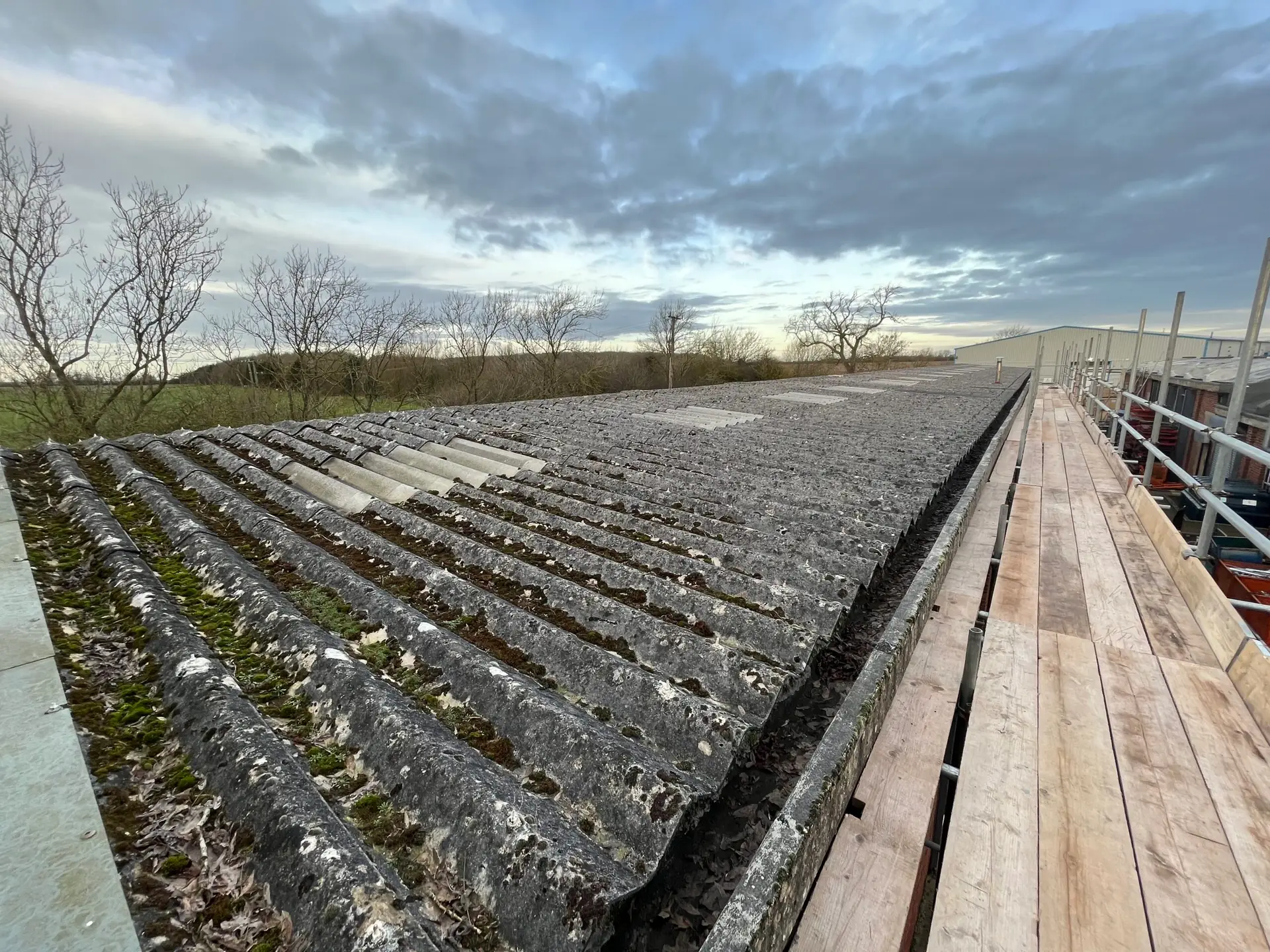
A comprehensive guide to asbestos: its history, industrial development, original advantages, commercial uses, health risks and continuing significance throughout the United Kingdom.
Once regarded as one of the most versatile materials in modern construction, asbestos became central to British industry before its serious health consequences led to progressively tighter restrictions and an eventual ban.
Asbestos is a collective term for a group of naturally occurring fibrous silicate minerals that were extensively used in construction, engineering and manufacturing.
These minerals form fibres with unusual physical properties, including resistance to heat, good tensile strength and chemical stability. Their fibres can be incorporated into cement, insulation, textiles and numerous manufactured products.
Rather than referring to one single mineral, the term asbestos encompasses six regulated mineral types. The three commercially important types historically encountered in British buildings are chrysotile, amosite and crocidolite, commonly called white, brown and blue asbestos.
For much of the twentieth century, asbestos was valued because it could improve the strength, durability, fire resistance and insulating characteristics of building materials.
Its widespread adoption created a lasting legacy. Many buildings erected or refurbished before 2000 still contain asbestos-containing materials, even though new use has been prohibited for decades.
The story of asbestos spans ancient civilisations, the Industrial Revolution, the expansion of modern manufacturing and one of the most significant occupational health challenges of the twentieth century.
Asbestos-bearing minerals were recognised and used in small quantities in antiquity, particularly for fire-resistant textiles. Their transformation into major industrial commodities occurred much later, when mining, processing and manufacturing developed at commercial scale.
Ancient societies recognised that certain fibrous minerals could withstand fire. Asbestos-containing materials appeared in specialised textiles and other limited applications, long before industrial mining.
Industrialisation increased demand for heat-resistant insulation, protective materials and durable manufactured components. Commercial asbestos mining expanded during the nineteenth century, supporting applications in steam engineering, factories, shipping and manufacturing.
Asbestos became established in insulation products, industrial equipment, fire-resistant materials and building components. Its use expanded alongside transport, power generation, shipbuilding and construction.
Medical and occupational concerns about asbestos dust were increasingly documented during the early twentieth century, even as industrial use continued.
Post-war reconstruction, industrial growth and demand for economical building systems encouraged extensive use of asbestos-containing products.
Asbestos cement roof sheets, insulation boards, pipe lagging, sprayed fire protection and other building products were installed throughout commercial, industrial and public-sector properties.
The United Kingdom introduced prohibitions covering the importation and use of blue and brown asbestos, reflecting growing recognition of the severe health risks.
Restrictions developed progressively, rather than asbestos disappearing from British construction overnight.
The prohibition was extended to chrysotile, or white asbestos, completing the general prohibition of asbestos in new products and construction applications, subject to narrow historical exemptions.
Attention has shifted from the manufacture and installation of asbestos products to the identification, management, repair, encapsulation and safe removal of existing asbestos-containing materials.
This remains a major concern for commercial property owners, facilities managers, construction contractors and public-sector estates.
The historical success of asbestos came from a combination of properties that manufacturers found difficult to reproduce economically in a single material.
These were engineering and commercial advantages, not health benefits. The serious consequences of inhaling asbestos fibres ultimately outweighed its practical usefulness.
Asbestos minerals tolerate high temperatures, making certain products attractive for boilers, furnaces, engines and other heat-intensive applications.
Asbestos-containing insulation and boards were historically installed to improve fire performance in structures and industrial equipment.
Fibres could reinforce cement products, helping manufacturers produce relatively thin, strong building components, including roof sheets.
Asbestos-containing materials were used to reduce heat transfer from pipes, boilers and industrial installations.
Certain asbestos minerals resist chemical attack and deterioration, supporting their historical use in seals, insulation and industrial products.
Industrial-scale mining and manufacturing made asbestos products widely available and relatively economical for many twentieth-century uses.
A material can perform exceptionally well in an engineering application while still presenting unacceptable occupational and public health risks. Asbestos is an important historical example of that distinction.
Asbestos-containing products entered almost every major area of twentieth-century construction and many industrial manufacturing processes.
Corrugated asbestos cement sheets, flat sheets, roof tiles and associated rainwater goods were used extensively on agricultural, commercial and industrial buildings.
Sprayed coatings, asbestos insulating board, fire doors and protective linings were used in buildings and industrial installations.
Pipe lagging, boiler insulation, industrial gaskets and thermal protection products were widely used around hot equipment.
Some floor tiles, adhesives, decorative coatings, partitions and ceiling products incorporated asbestos-containing components.
Asbestos was historically used in friction materials, including vehicle brake linings and clutch components, as well as railway and marine equipment.
Asbestos appeared in textiles, seals, electrical insulation, protective materials and specialist products requiring particular thermal or mechanical characteristics.
Although six asbestos minerals are regulated, three accounted for the majority of commercial applications encountered in British buildings.
Their common colour-based names are historical descriptions, not a reliable method of identification. The asbestos type cannot be safely confirmed simply by looking at a material.
Crocidolite was historically used in selected insulation, sprayed coatings and industrial applications.
It is associated with particularly serious asbestos-related health risks. Its importation and use were prohibited in the UK in 1985.
Explore Blue Asbestos →Amosite was used particularly in thermal insulation products, insulating board and some fire-protection materials.
Its rigid amphibole fibres present substantial health hazards when inhaled. The UK prohibition was introduced in 1985.
Explore Brown Asbestos →Chrysotile was the most commercially widespread asbestos type and featured prominently in asbestos cement roofing and many other products.
It is also hazardous when fibres are inhaled. Its use was generally prohibited in the UK in 1999.
Explore White Asbestos →The greatest danger arises when airborne asbestos fibres are inhaled into the respiratory system.
Asbestos-containing products may release fibres when cut, drilled, broken, abraded, disturbed or allowed to deteriorate into a damaged state.
Exposure may lead to serious diseases that develop decades after the original contact. The absence of immediate symptoms does not mean exposure was harmless.
Risks depend on factors including fibre type, the material's condition, the nature and intensity of exposure, and the precautions taken.
No form of asbestos should be regarded as safe to inhale.
An aggressive cancer primarily affecting the lining of the lungs, strongly associated with asbestos exposure.
A serious cancer associated with inhaled asbestos fibres. Smoking in combination with asbestos exposure greatly increases lung cancer risk.
Progressive scarring of lung tissue associated with substantial cumulative asbestos exposure.
Asbestos exposure can cause pleural thickening and plaques. Some conditions may affect breathing and lung function.
Although asbestos was prohibited in new uses decades ago, diseases resulting from historical exposure continue to affect thousands of people.
Sources: Health and Safety Executive, published asbestos statistics and government guidance. The mesothelioma figure relates to deaths in 2024; published statistics are subject to subsequent revision.
The general importation, supply and new use of asbestos are prohibited in the UK, but asbestos-containing materials already installed in existing buildings are not automatically unlawful.
This distinction is central to modern asbestos management. Millions of individual building components were installed before the ban and many remain in service today.
The Control of Asbestos Regulations 2012 establish duties concerning asbestos management and work involving asbestos.
Dutyholders responsible for relevant non-domestic buildings must identify and manage asbestos risks, maintain suitable records and communicate relevant information to those who may disturb materials.
Identification:
Establish where asbestos
may be present.
Condition:
Assess deterioration and
likelihood of disturbance.
Documentation:
Maintain relevant asbestos
information and a
management plan.
Communication:
Inform employees, maintenance
workers and contractors
who may encounter the material.
Remedial Action:
Arrange appropriate protection,
repair, encapsulation or
removal where required.
No. HSE guidance explains that asbestos-containing material in good condition, unlikely to be disturbed or damaged, is usually safer left in place under an effective management programme. Damaged materials and planned works require separate assessment.
Asbestos no longer supports a legitimate new-materials industry in the UK. Instead, its economic significance now lies in the management of Britain's existing buildings, industrial assets and infrastructure.
The legacy of twentieth-century asbestos use affects maintenance budgets, redevelopment decisions, occupational health, surveying, specialist contracting and long-term property management.
Building owners and facilities managers must account for asbestos when maintaining, refurbishing or altering older premises. Surveys, inspections, management plans and specialist works can influence operating expenditure and capital investment decisions.
Schools, hospitals, administrative buildings and other public assets constructed or refurbished before 2000 may contain asbestos. Managing these materials is an ongoing responsibility within public estate maintenance and refurbishment programmes.
Asbestos cement roofing remains a consideration for factories, warehouses, agricultural properties and older commercial buildings. Owners may face decisions between maintaining existing roofing, specialist encapsulation, refurbishment or replacement.
Asbestos can affect project sequencing, demolition strategy, contractor selection and programme costs. Refurbishment and demolition surveys may be required before intrusive works. Failure to identify asbestos can create serious safety, legal and financial consequences.
Legacy asbestos creates continuing demand for competent surveyors, analysts, licensed removal contractors, waste management providers and appropriately trained maintenance specialists. The work is fundamentally about managing historical risk, not encouraging new asbestos use.
Asbestos management presents recurring inspection and maintenance requirements. Future replacement, redevelopment or remedial work can also generate significant expenditure. The financial implications depend on material condition, access, project scope and applicable safety controls.
There is no single comprehensive, official annual figure covering all UK asbestos management, removal, refurbishment and associated property costs. It would therefore be misleading to treat the asbestos legacy as having one definitive national expenditure value.
Asbestos cement roofing is one of the most recognisable remaining applications of asbestos in commercial and industrial property.
Many older premises retain corrugated asbestos cement roofing or cladding installed before the UK ban.
The presence of asbestos cement does not itself mean immediate removal is necessary. Its condition, likelihood of disturbance, building requirements and future use must all be considered.
Where suitable, protective coating systems may form part of a managed refurbishment approach. In other circumstances, removal and replacement may be the appropriate solution.
Confirm the roof material, condition, structural suitability and existing asbestos information before selecting any treatment.
Appropriate encapsulation or coating systems may help protect suitable asbestos cement roofs, subject to correct risk assessment and working methods.
Severely deteriorated, unsuitable or structurally compromised roofs may require replacement rather than continued refurbishment.
This article is intended as general educational information. For specific property management decisions or asbestos-related work, consult suitably competent professionals and the relevant HSE guidance.
Content reviewed: November 2026. Published information and regulations should be checked for subsequent updates.
Elite Waterproofing specialises in asbestos cement roof refurbishment, protective coating systems and commercial roofing solutions.
If you manage an existing asbestos cement roof, our team can discuss suitable refurbishment or replacement options according to the building's requirements.
Request a Free Quote