
Reduced Work at Height
Aerial photography can reduce the need for personnel to physically access roof areas during an initial inspection, where the required information can be obtained remotely.

High-resolution aerial roof inspections for commercial and industrial properties. Identify visible defects, document roof condition and investigate maintenance concerns without relying on physical access to every area of the roof.
Drone technology provides an effective method of observing commercial roofing systems from above, capturing details that can be difficult to see from ground level.
Commercial and industrial roofs are often extensive, elevated and difficult to access. Traditional inspections may require scaffolding, mobile elevated work platforms or specialist roof access arrangements.
A drone roof survey can provide detailed aerial photographs of roof coverings, rooflights, gutters, flashings and associated components, supporting the identification of visible defects and deterioration.
At Elite Waterproofing, aerial inspection information can be reviewed in the context of practical roofing knowledge, helping clients understand the implications of observed defects and the potential next steps.
Discuss Your Roof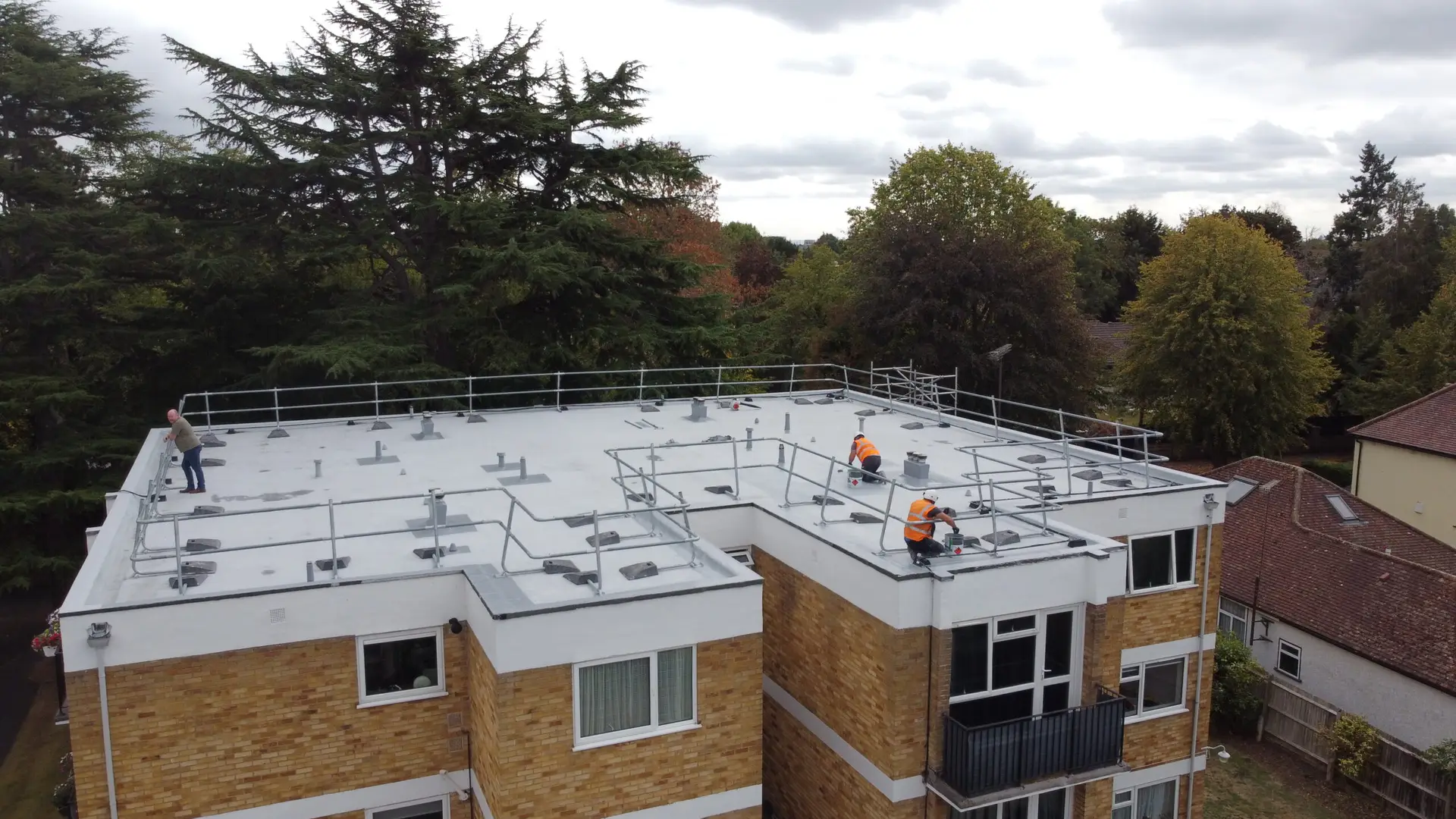
Drone inspections can offer a practical alternative to certain traditional inspection methods, particularly where extensive roof areas need to be photographed and assessed.
Aerial photography can reduce the need for personnel to physically access roof areas during an initial inspection, where the required information can be obtained remotely.
Detailed aerial images provide a visual record of roof surfaces, visible defects and key components, supporting further examination and photographic reporting.
Suitable drone surveys can capture imagery across large roofing areas efficiently, reducing some of the access arrangements associated with traditional inspections.
Elevated viewpoints can assist with observing large warehouses, factories and multi-section roofs, including areas that are difficult to inspect from ground level.
Close-up aerial photography may help identify areas of concern requiring further inspection, maintenance or specialist investigation.
Photographs and accompanying observations can support maintenance records, condition reports and informed decisions about future roofing expenditure.
The defects and roofing components that can be assessed will depend on the roof construction, visibility, camera positioning and the agreed inspection scope.
Visible corrosion, coating deterioration and rusting around sheet edges, fixings and other exposed metal details.
Visible cracks, fractures, displaced sheets, impact damage and deterioration affecting asbestos cement or metal roofing.
Visible cracking, surface deterioration, damaged glazing, discolouration and problems around rooflight surrounds.
Accumulated debris, vegetation, apparent blockages, visible deterioration and signs of standing water in drainage areas.
Visible damage, displacement, open joints and deterioration around roof junctions, abutments and penetrations.
Observable splits, surface damage, blistering, patches and other visible defects affecting flat roofing systems.
Areas of standing water visible at the time of inspection, which may indicate drainage or roof falls requiring investigation.
Visible missing or displaced fixings, corrosion and signs of deterioration around accessible fixing details.
Existing repair patches, historic coating applications and other visible remedial work that may require further review.
Inspection limitations: A visual drone roof survey is not a guarantee that every defect will be identified. Concealed defects, moisture within roof construction, fixing integrity and structural condition may require physical inspection, specialist testing or other investigation methods.
Aerial imagery is most useful when it can support meaningful decisions about the condition and management of a commercial roof.
Our survey scope can be tailored to the client's requirements, from an initial photographic inspection to a more detailed written roof condition report.
Where a report is commissioned, observations and images can be presented together to identify areas of concern and recommended next steps.
Explore Roof Condition ReportsAerial roof inspections can be considered for a wide variety of commercial and industrial properties, subject to site suitability and applicable flight requirements.
From initial enquiry to delivery of the agreed photographic information or report, our inspection approach is based on the requirements of the individual property.
We establish the property location, approximate roof size, roof construction and known maintenance concerns.
The proposed inspection is assessed for site suitability, weather, airspace restrictions, access and safe operation.
Photographs are captured across the agreed roof areas, including selected details and visible areas of concern.
The aerial imagery is reviewed and the agreed photographs, observations or written report are prepared.
An aerial visual inspection can form part of a wider roof assessment. Additional survey methods may provide information that conventional aerial photographs cannot establish.
The cost depends on the size of the property, roof complexity, location, flight requirements and the level of reporting required.
An initial photographic inspection will generally have a different scope from a detailed roof condition assessment with annotated photographs and written recommendations.
Contact Elite Waterproofing with the site details for a tailored quotation.
Drone photographs may reveal potential causes of water ingress, including damaged roof coverings, deteriorated flashings, open joints and blocked drainage areas.
Water can travel within roofing systems before becoming visible internally. As a result, aerial photography alone may not establish the precise point of water entry.
Drone photography can be particularly useful for observing asbestos cement roofing without physically accessing fragile roof sheets.
Aerial inspections may document visible damage, deterioration and other observable concerns.
However, drone photographs cannot conclusively establish the asbestos content of a material and are not a replacement for a formal asbestos survey or testing.
For certain initial photographic inspections, drone technology may provide sufficient information without installing scaffolding or using elevated access equipment.
Where defects require physical examination, testing or remedial work, suitable access arrangements may still be necessary.
Drone inspections can often be planned around operational buildings, subject to the activities taking place, the site environment and applicable aviation requirements.
In some circumstances, temporary restrictions or coordination with site personnel may be required to undertake the flight safely.
Suitable weather conditions are important for safe drone operations and reliable photographic results.
Strong winds, rain, poor visibility and other adverse conditions may require an inspection to be postponed or rescheduled.
A conventional visual drone survey uses visible-light photography. Thermal imaging requires specialist equipment and appropriate inspection conditions.
Where suitable, thermal investigations can be considered as an additional service.
Find out more about our thermal roof surveys .
Yes. Aerial photographs and condition observations can help establish an initial understanding of the roof and the potential scope of remedial work.
Depending on the proposed works, further measurements, site inspections or construction information may be required before a final quotation can be prepared.
If you require an aerial inspection of a commercial or industrial roof, contact Elite Waterproofing to discuss your property, inspection requirements and reporting options.