
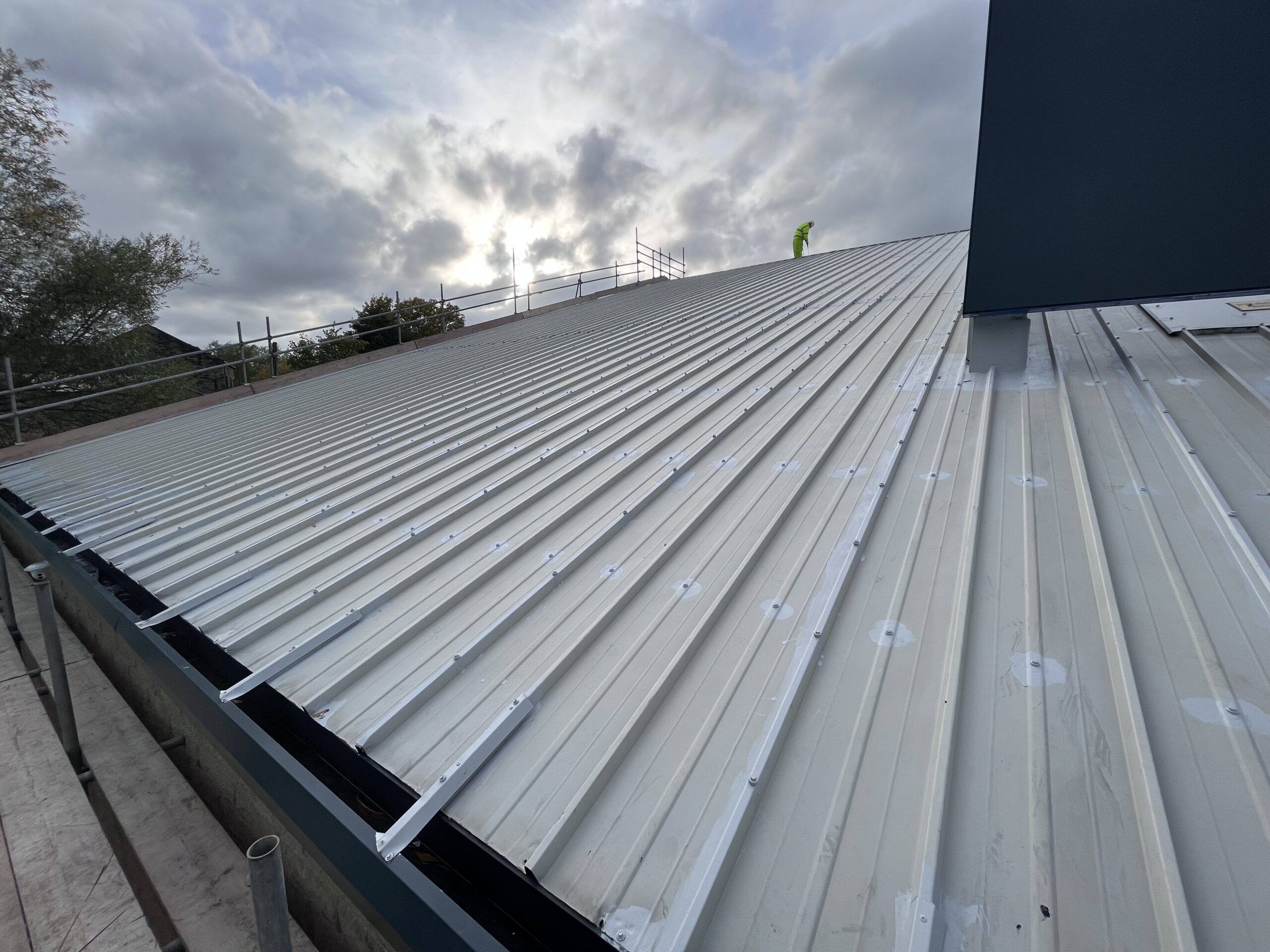
What Is Metal Roofing?
A comprehensive guide to metal roofing, its industrial history, material properties, engineering advantages, modern applications and continued importance throughout the United Kingdom.
From early corrugated iron to modern coated steel and aluminium roofing systems, metal has become one of the defining materials of commercial and industrial building construction.
What Exactly Is Metal Roofing?
Metal roofing refers to roof coverings manufactured from metal sheets, panels or formed components designed to protect buildings from the weather.
In the UK commercial and industrial sector, common materials include steel and aluminium, often formed into profiled sheets with specialist protective coatings.
Roofing sheets may have trapezoidal, sinusoidal or standing-seam profiles. The chosen geometry affects stiffness, appearance, joint design and installation requirements.
Metal roofs are frequently installed over steel-framed buildings, although the supporting structure may vary. The roof covering itself forms only one part of the complete engineered building envelope.
Insulation, vapour control, structural supports, fixings, rooflights, flashings and drainage all contribute to overall performance.
Modern metal roofing is used extensively on warehouses, factories, distribution centres, retail premises and agricultural buildings because of its versatility.
The History of Metal Roofing
Metal has been used as a roofing material for centuries, but industrial manufacturing transformed it from a specialist architectural covering into a widely available construction product.
Improvements in metal production, protective treatments, sheet forming and mechanical fixing methods helped create modern commercial roofing systems.
Early Metal Roof Coverings
Metals such as copper and lead were used in selected historic roofing applications because of their ability to form durable, weather-resistant coverings.
The expense and methods of production generally limited their use to particular buildings and architectural projects.
The Industrial Revolution
Industrialisation brought improvements in iron and steel production, alongside methods for forming thin metal sheets.
Corrugated iron became an important lightweight roofing product, particularly for agricultural and industrial applications.
The corrugated form gave metal sheets greater stiffness than equivalent flat sheet material.
Expansion of Industrial Roofing
Factories, warehouses and transport infrastructure increasingly relied on manufactured metal roofing.
Galvanising, sheet forming and improvements in steel manufacture contributed to wider availability.
Post-War Commercial Construction
Expansion in manufacturing, logistics and large commercial buildings increased demand for lightweight roof coverings.
More sophisticated profiled steel and aluminium systems developed as roll-forming and coating technologies improved.
Trapezoidal sheets and insulated double-skin assemblies became important elements of industrial building construction.
Protective Coatings and Insulation
Factory-applied organic coatings, improved metal finishes and more advanced insulation assemblies increased the range of available roof systems.
Building design increasingly considered thermal performance, condensation control and whole-life maintenance requirements.
Modern Building Envelopes
Metal roofing remains a major component of commercial and industrial construction, supported by engineered systems for insulation, drainage, wind loading and long-term durability.
Older metal roofing now represents a substantial maintenance and refurbishment consideration for property owners.
What Metals Are Used in Roofing?
Different metals provide different combinations of strength, weight, durability, appearance and environmental resistance.
Coated Steel
Steel is widely used in commercial metal roofing. Its mechanical strength and suitability for roll forming make it well suited to profiled roofing products.
Protective metallic coatings, such as zinc-based finishes, together with optional organic paint systems, help control corrosion.
Aluminium
Aluminium is valued for its relatively low weight and natural corrosion resistance.
It can be used in profiled roofing, standing seam systems and other architectural applications.
Zinc
Zinc roofing is commonly associated with standing seam and architectural roof systems.
Its surface develops a protective patina under suitable environmental conditions.
Copper
Copper has a long history in roofing and is valued for its distinctive appearance and durability.
It is generally associated with architectural and specialist projects rather than standard large-span industrial roofing.
Stainless Steel
Certain stainless steel alloys can provide corrosion resistance for selected demanding roofing environments.
Appropriate alloy selection, detailing and material compatibility remain essential.
Metal Coatings
Metallic and organic protective coatings are important components of many steel roofing products.
Their performance depends on specification, exposure, installation quality and maintenance.
While several metals can be used for roofing, most of the commercial and industrial roof refurbishment work discussed on this website relates to profiled steel and aluminium systems.
Why Is Metal Roofing So Widely Used?
Metal roofing offers a combination of material efficiency, durability, structural performance and manufacturing flexibility that suits many building types.
Lightweight Construction
Thin metal sheets can provide extensive coverage without the weight associated with many traditional roof coverings.
Profile Stiffness
Formed profiles improve sheet stiffness and enable appropriately engineered spans between supports.
Long-Term Performance
Suitable metals, protective coatings and correct detailing can deliver durable roof systems.
Efficient Coverage
Manufactured roofing components can be installed over large areas, subject to appropriate handling and access arrangements.
Thermal System Options
Metal roofing can be incorporated into insulated assemblies designed to meet building performance requirements.
Maintenance Potential
Many existing systems can be inspected, maintained or repaired, with refurbishment possible where condition permits.
Explore Metal Roofing in More Detail
The following guides explore two important aspects of commercial and industrial metal roofing: profiled roof construction and over-roofing refurbishment.
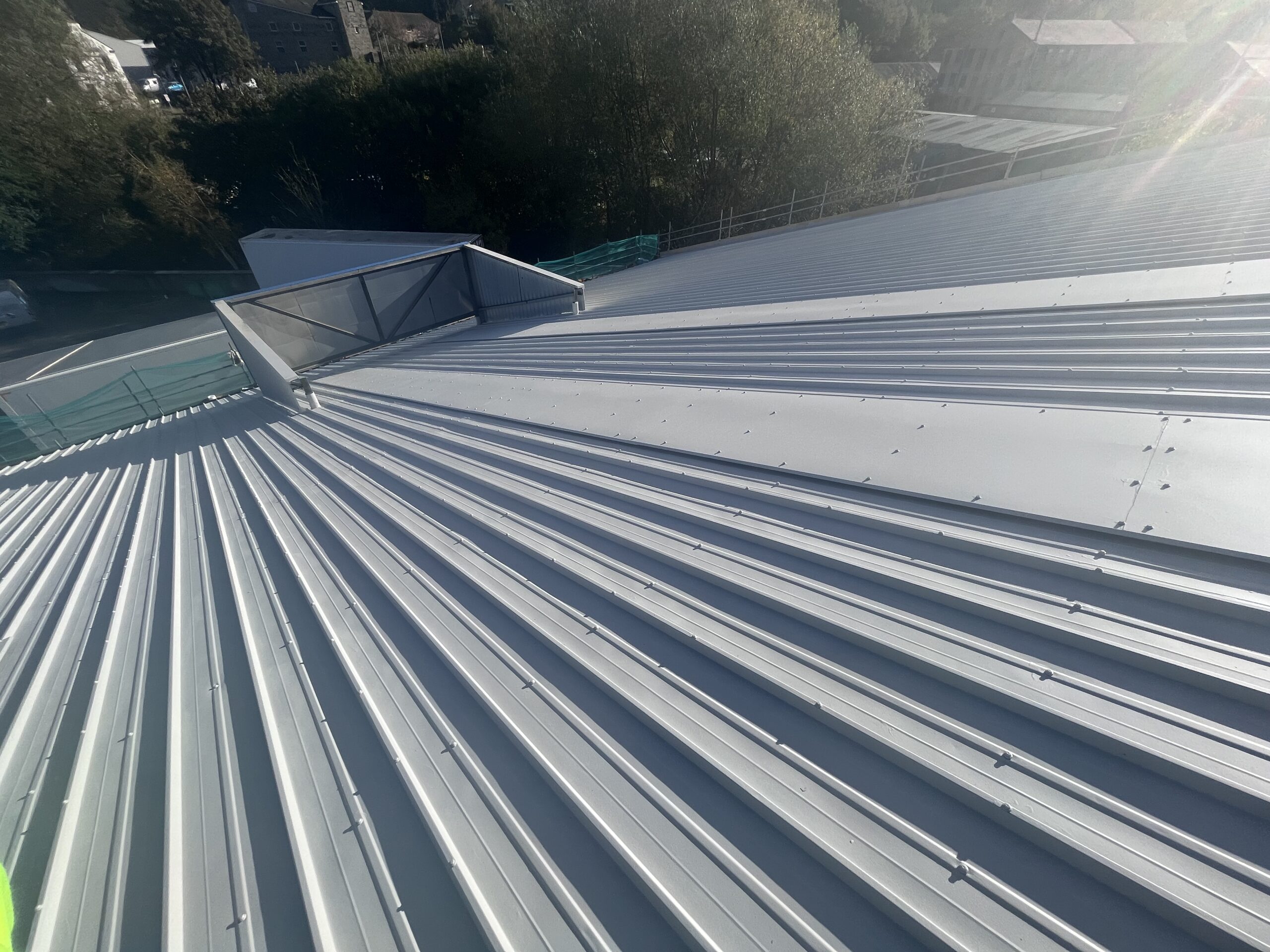
Trapezoidal Roofing
Trapezoidal roofing is characterised by repeating raised ribs with sloping sides and flat crowns.
This geometry increases sheet stiffness and is widely used on commercial, industrial and agricultural buildings.
Our technical guide explores its development, materials, engineering characteristics, common defects and refurbishment options.
Explore Trapezoidal Roofing →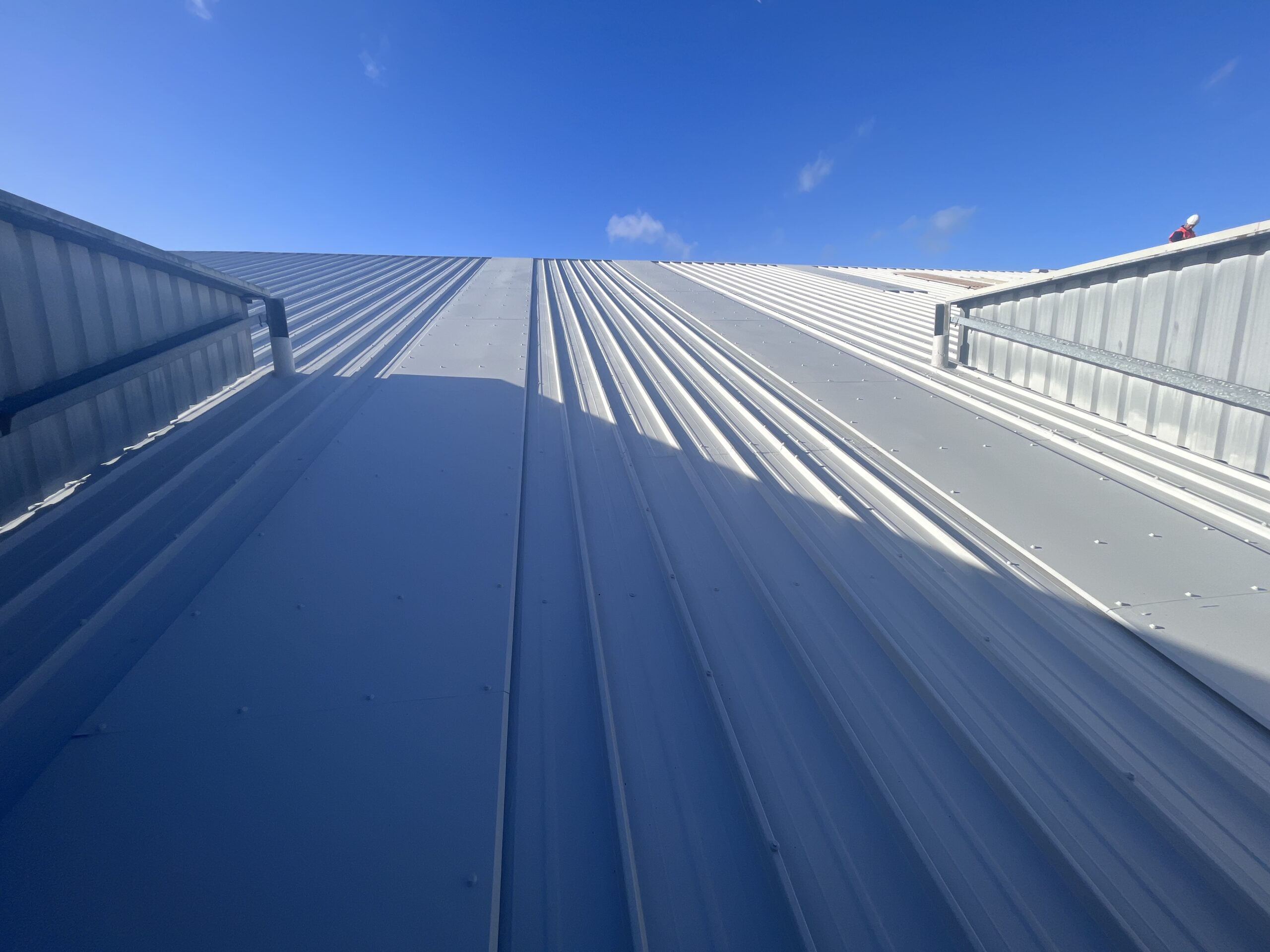
Roof Overcladding
Overcladding involves installing a new roof covering above a suitable existing roof assembly.
Depending on the design, the method may allow existing roof materials to remain in place beneath a new engineered covering.
Our guide explains support structures, insulation, structural loading, asbestos considerations and project suitability.
Explore Roof Overcladding →Trapezoidal refers to the physical profile of a metal sheet. Overcladding describes a construction and refurbishment method. A metal roof overcladding system may itself use trapezoidal sheets.
The Problems Associated with Metal Roofing
Although metal roofing can provide long-term performance, exposure to weather, moisture, movement and ageing can result in deterioration.
The nature of the problems depends on the roofing material, protective finish, environmental conditions, original installation and maintenance history.
Corrosion is a major consideration for steel roofing, especially where protective finishes have deteriorated.
Metal roofing can also experience water ingress at fixings, laps, flashings and penetrations.
Condensation is another consideration where insulation or vapour control arrangements are inadequate.
Identifying the cause of a defect is essential before selecting a repair or refurbishment method.
Corrosion and Rust
Protective coating deterioration and prolonged moisture exposure can lead to steel corrosion.
Cut-Edge Corrosion
Corrosion can develop along exposed cut edges, particularly around overlapping profiled steel sheets.
Failed Fixings
Degraded washers, unsuitable fasteners or defective sealing can permit water entry.
Lap and Flashing Failure
Deteriorated seals, poor detailing or movement may compromise roof weathertightness.
Condensation
Inadequate thermal, ventilation or vapour control strategies can result in unwanted moisture.
Physical Damage
Impact damage, unsuitable maintenance access and previous alterations may damage roof sheets.
Metal Roofing in Practice
Metal roofing plays an important role in protecting modern commercial and industrial buildings.
These photographs are drawn from the Elite Waterproofing website's media collection.
Repairing and Refurbishing Metal Roofs
The most appropriate approach to an ageing metal roof depends on its condition, structural integrity, remaining performance and the requirements of the property.
Some roofs can be maintained or refurbished with targeted repairs and suitable protective coating systems. Others may require overcladding or full replacement.
Roof Assessment
Identify the existing material, roof construction, coating condition, corrosion and potential water entry points.
Targeted Remedial Works
Suitable roofs may benefit from repairs to fixings, laps, penetrations, flashings or locally damaged areas.
Protective Coatings
A properly specified coating system can protect suitable metal substrates against further environmental exposure.
New Outer Covering
Engineered overcladding may provide a new weatherproof roof covering above a suitable existing assembly.
Roof Replacement
Roofs with major structural, corrosion or suitability issues may require complete removal and replacement.
Ongoing Roof Care
Suitable inspections and planned maintenance can help identify deterioration before it creates major operational problems.
No. Protective coatings require a suitable substrate and appropriate preparation. Severely corroded, perforated or structurally unsuitable roof sheets may require replacement. A coating cannot restore lost structural capacity.
Metal Roof Refurbishment vs Replacement
Roof owners should evaluate available solutions based on technical suitability, operational requirements and long-term value.
| Consideration | Coating Refurbishment | Overcladding | Replacement |
|---|---|---|---|
| Existing covering | Generally retained | Generally retained beneath new roof | Removed and replaced |
| Main purpose | Protection and repair of suitable surfaces | New outer roofing system | New roof assembly |
| Structural consideration | Existing roof must remain suitable | Additional loads must be assessed | Existing and proposed structure must be assessed |
| Insulation upgrade | Usually separate from coating | May be integrated into new design | May be incorporated in replacement |
| Typical suitability | Serviceable roof with repairable defects | Building suitable for engineered over-roofing | Roof requiring major renewal |
| Business disruption | Depends on preparation and work scope | Depends on supports and detailing | Depends on strip-off and construction approach |
Metal Roofing in the Modern UK Economy
Metal roofing is an important element of the UK's commercial, industrial and agricultural building stock.
Its economic importance extends beyond new construction to the maintenance and modernisation of existing buildings.
Manufacturing Facilities
Factories often rely on large roof areas to protect production machinery, stock and personnel.
Logistics and Warehousing
Distribution centres and warehouses commonly incorporate profiled metal roofing within large-span buildings.
Commercial Property
Retail, leisure and commercial buildings may use metal roofing as part of their weatherproof building envelope.
Agricultural Construction
Metal roof sheets are widely used on farm buildings, storage facilities and agricultural structures.
Energy Performance
Roofing upgrades can create opportunities to improve insulation and thermal performance, subject to suitable design and compliance.
Maintenance and Investment
Existing roofing requires long-term inspection, planned maintenance and capital investment where deterioration occurs.
The UK construction sector includes extensive activity relating to roofing and building-envelope systems. However, there is no single official figure that comprehensively measures all annual expenditure specifically on metal roofing manufacture, maintenance, refurbishment and replacement.
Safety Considerations for Metal Roofing
Metal roof sheets should never automatically be assumed capable of safely supporting a person's weight.
Roof condition, structural design, corrosion, liner panels and rooflights can all affect safety.
HSE guidance requires roofs to be treated as fragile until a competent person has confirmed otherwise.
Appropriate access, fall prevention, safe systems of work and competent assessment are essential during roof maintenance or refurbishment.
Works at occupied commercial premises must also consider people, machinery and business operations below the roof.
Fragile Surfaces
Corroded metal sheets, rooflights and some liner panels may be fragile.
Safe Access
Roof work requires appropriate access arrangements and fall-prevention measures.
Structural Assessment
Existing roof condition and structural capacity must be assessed where relevant to proposed works.
Building Occupancy
Construction planning must consider building users and activities beneath the work area.
Industry Guidance and References
This article provides general information about metal roofing. Actual construction and refurbishment projects require appropriate technical design, specification and site-specific assessment.
- Metal Cladding and Roofing Manufacturers Association
- MCRMA — Metals: Steel and Aluminium
- MCRMA — Over-Roofing Guidance
- HSE — Roof Work Safety
- HSE — Fragile Surfaces
Educational content prepared: November 2026. Refer to current standards, manufacturer instructions and applicable regulations when planning roof work.
Commercial Metal Roofing Solutions
Elite Waterproofing provides metal roof refurbishment, protective coating systems, repair and replacement services for commercial and industrial properties.
Whether your existing metal roof is affected by corrosion, leaks, coating deterioration or general ageing, our team can discuss appropriate solutions for the building.
Request a Free Quote