
Flexible Fibres
Chrysotile fibres are relatively flexible, making them suitable for incorporating into manufactured composites and certain textiles.

The history, industrial development, engineering properties and health risks of the world's most widely used asbestos mineral.
Chrysotile played an important role in twentieth-century construction, particularly in asbestos cement roofing, cladding, insulation products and manufactured building components.
Although its new use has been prohibited in the United Kingdom since 1999, chrysotile-containing materials remain present in many older commercial, industrial and agricultural buildings.
White asbestos, scientifically known as chrysotile, is a naturally occurring fibrous silicate mineral belonging to the serpentine family.
Chrysotile differs from blue and brown asbestos because its fibres generally have a curved, flexible structure rather than the relatively straight, rigid structure associated with amphibole asbestos.
It is a hydrated magnesium silicate mineral formed through geological processes affecting magnesium-rich rocks.
Historically, the mineral was valued for its flexibility, tensile strength, resistance to heat and ability to reinforce other materials.
These characteristics allowed manufacturers to incorporate chrysotile into products ranging from corrugated cement roofing sheets to friction materials, textiles, seals and insulation.
Chrysotile became the most commercially widespread asbestos type, accounting for the majority of asbestos used globally.
Despite differences in fibre structure and relative disease potency, chrysotile is carcinogenic to humans. Exposure to airborne fibres can cause serious illness.
Common name
White asbestos
Mineral name
Chrysotile
Mineral family
Serpentine
Chemical classification
Hydrated magnesium silicate
Fibre characteristics
Curved, flexible,
fine mineral fibres
Historical applications
Asbestos cement roofing,
cladding, pipes, insulation,
textiles and friction materials
UK prohibition
1999
Health classification
Carcinogenic to humans
Chrysotile developed from a relatively specialised mineral into a major industrial commodity, closely associated with the expansion of modern construction and mass manufacturing.
Its large-scale adoption was encouraged by the growth of commercial asbestos mining, improved manufacturing techniques and demand for durable, inexpensive building materials.
Asbestos-bearing minerals were known to ancient civilisations and used in limited applications requiring resistance to heat and fire.
Large-scale commercial exploitation developed much later.
The growth of factories, steam engineering and industrial transport increased demand for thermal insulation and heat-resistant materials.
Major chrysotile mining operations developed in countries including Canada and Russia.
Chrysotile became an established component in manufactured asbestos cement, insulation, protective textiles and industrial products.
Its relatively flexible fibres made it suitable for incorporation into various composite materials.
Post-war industrial development and expanding building programmes increased demand for economical roofing and cladding systems.
Corrugated asbestos cement roof sheets became common on factories, warehouses, agricultural buildings, garages and commercial properties.
Chrysotile was the principal asbestos mineral in many of these cement products.
Growing scientific evidence of asbestos-related disease led to progressively tighter workplace controls, product restrictions and the development of alternative materials.
Although blue and brown asbestos were prohibited in the UK in 1985, chrysotile remained in some permitted uses for a further period.
The general UK prohibition was extended to white asbestos, bringing the supply and new use of asbestos products to an end, subject to limited historical exceptions.
Existing asbestos-containing products were not universally required to be removed solely because of the ban.
Chrysotile remains relevant because asbestos cement and other historical products are still present in older buildings.
Modern work focuses on inspection, management, controlled maintenance, suitable refurbishment and safe removal where necessary.
Chrysotile combined several properties that made it particularly attractive for mass-produced construction and industrial products.
These were engineering and manufacturing advantages, not health benefits. The serious health risks associated with asbestos exposure ultimately led to its prohibition.
Chrysotile fibres are relatively flexible, making them suitable for incorporating into manufactured composites and certain textiles.
The fibres provided reinforcement within cement-based materials, helping create durable roof sheets and other building products.
Chrysotile-containing products were used in thermal and fire-resistant applications because of their performance under elevated temperatures.
Asbestos cement products provided a practical building envelope material capable of withstanding ordinary external weather conditions.
Chrysotile could be processed and combined with cement, resins, textiles and other manufacturing materials.
Industrial-scale production allowed asbestos-containing products to be manufactured economically and supplied to expanding construction markets.
Chrysotile's usefulness in construction does not mean the material was safe. Inhalation of airborne chrysotile fibres can cause serious disease, including cancer.
Chrysotile was incorporated into an exceptionally wide range of manufactured products, particularly those requiring reinforcement, durability or resistance to heat.
Corrugated roof sheets, flat cement sheets, roof tiles and associated products were common applications of chrysotile.
These products were widely used on commercial, industrial and agricultural premises.
Chrysotile-containing cement sheets were used in external cladding, fascia panels and other building envelope components.
Some historical gutters, downpipes, drainage pipes and related fittings were manufactured using asbestos cement.
Chrysotile was used in certain vinyl floor tiles, textured coatings, adhesives and other manufactured interior building products.
Historical friction materials, including brake linings and clutch components, sometimes incorporated chrysotile asbestos.
Some insulation products, seals, protective textiles and specialised engineering materials contained chrysotile.
Asbestos cement roofing is one of the most recognisable historical uses of chrysotile in British construction.
Asbestos cement is formed by incorporating asbestos fibres into a cement matrix, producing a relatively rigid, reinforced material.
Manufacturers used this material to produce corrugated roofing sheets, cladding panels, flat sheets and rainwater components.
Many existing roofs were installed decades ago and may now show signs of weathering, surface deterioration, cracking or water ingress.
However, deterioration does not automatically mean every roof requires immediate removal. Its condition and suitability for continued service must be assessed.
An asbestos cement roof can remain an important building-management consideration even when it is not currently leaking.
Corrugated asbestos cement sheets were popular because of their durability, relatively low weight, weather resistance and commercial practicality.
Exposure to weather, changes in building use, previous repairs and general ageing may affect the performance of existing roofing.
Where the roof remains suitable, specialist protective coating systems may form part of an appropriate refurbishment strategy.
Heavily damaged, unsuitable or structurally compromised roofing may require removal and replacement rather than continued refurbishment.
Yes. White asbestos is a recognised human carcinogen and can cause serious illness when airborne fibres are inhaled.
Chrysotile differs structurally from amphibole asbestos, and the relative risk of certain diseases varies between fibre types.
However, these differences do not make chrysotile safe to inhale.
Exposure can occur when asbestos-containing materials are cut, broken, drilled, abraded or otherwise disturbed.
Diseases may develop decades after exposure. The absence of symptoms immediately after an incident does not establish that the exposure was harmless.
The risk from a particular material depends on its condition, fibre bonding, the activity being undertaken and the controls in place.
Chrysotile exposure can cause mesothelioma, a serious cancer affecting the lining of the lungs or other body cavities.
Inhalation of asbestos fibres increases lung cancer risk. Smoking combined with asbestos exposure substantially increases this danger.
A chronic scarring condition affecting lung tissue, generally associated with substantial cumulative asbestos exposure.
Asbestos exposure can cause pleural plaques and diffuse pleural thickening, with some conditions affecting breathing.
Asbestos fibres are generally more firmly bound in intact asbestos cement than in friable insulation or sprayed asbestos coatings. This can reduce the likelihood of fibre release during normal undisturbed use.
However, asbestos cement can still present significant hazards when damaged or worked on incorrectly. It must not be assumed to be harmless.
Three asbestos minerals accounted for much of the historical commercial use of asbestos within British construction.
They differ in mineral composition, fibre structure and historical applications. All can cause serious asbestos-related disease.
The most commonly used asbestos mineral. Historically incorporated into asbestos cement roofing, cladding, pipes and numerous manufactured materials.
Prohibited from new UK use in 1999.
Current Page
Historically important in asbestos insulating board, fire protection and thermal insulation.
Its straight, rigid amphibole fibres present serious health hazards.
Explore Brown Asbestos →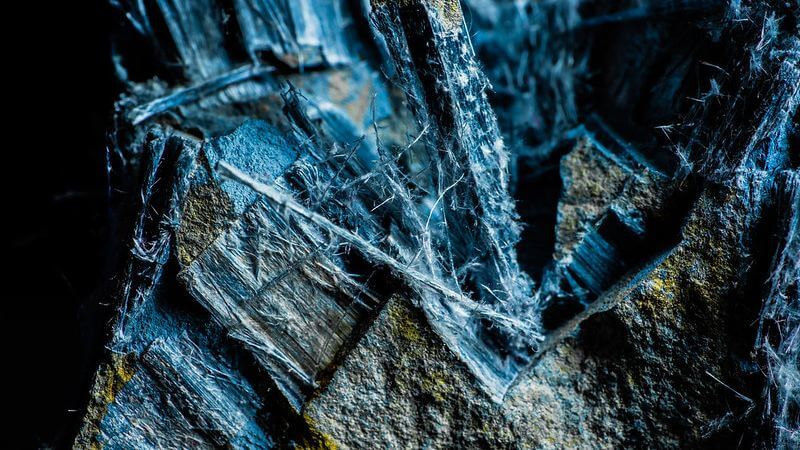
Historically used in specialist insulation, sprayed fire protection and certain industrial materials.
Associated with particularly serious mesothelioma risks.
Explore Blue Asbestos →No. White, brown and blue are common mineral names, not reliable visual identification methods for building materials.
Appropriate professional sampling and accredited laboratory analysis may be required to determine whether asbestos is present and identify its type.
| Characteristic | White | Brown | Blue |
|---|---|---|---|
| Mineral | Chrysotile | Amosite | Crocidolite |
| Family | Serpentine | Amphibole | Amphibole |
| Fibre structure | Curved, flexible | Straight, rigid | Straight, rigid |
| Historical uses | Cement roofing and many products | Insulating boards and insulation | Sprayed coatings and insulation |
| UK prohibition | 1999 | 1985 | 1985 |
| Health status | Carcinogenic | Carcinogenic | Carcinogenic |
The new use and supply of white asbestos were generally prohibited in the UK in 1999.
However, the ban did not automatically require the removal of all asbestos-containing materials already installed in buildings.
In Great Britain, the Control of Asbestos Regulations 2012 establish duties relating to asbestos management and work.
Dutyholders responsible for relevant non-domestic premises must assess asbestos risks, maintain appropriate information and implement a suitable management plan.
Where existing asbestos cement roofing remains in good condition and is unlikely to be disturbed, it may be managed in place.
Work on asbestos cement requires the appropriate controls, competence and classification for the proposed activity.
Northern Ireland has corresponding legislation and its own enforcement arrangements.
Asbestos cement roofing requires a considered approach based on the existing material's condition, the proposed work and the operational requirements of the building.
Confirm the presence of asbestos, assess existing records and establish the roof's condition before proposing work.
Structural suitability, surface deterioration and the likelihood of fibre release must be considered.
Suitable asbestos cement roofing may remain in service under an effective management programme.
Inspections, condition records and appropriate remedial action can form part of ongoing property maintenance.
Where technically appropriate, specialist coating systems may provide additional weather protection and form part of a refurbishment programme.
Product suitability, substrate preparation and applicable asbestos safety controls must be established first.
Roofs that are extensively damaged, unsuitable or structurally compromised may require removal and replacement.
Removal methods, waste arrangements and contractor competence must comply with applicable requirements.
Commercial roofing works should consider the activities, stock, equipment and people beneath the roof.
Appropriate planning may help reduce operational disruption where the proposed works allow.
Refurbishment and replacement options should be considered alongside material condition, project costs, service life and future maintenance.
Applying a protective coating does not automatically make an asbestos-containing roof safe or eliminate existing asbestos management duties.
Surface preparation can itself disturb asbestos fibres. Any proposed cleaning, preparation, repair or coating work must be assessed against the relevant HSE guidance and legal requirements.
Chrysotile's widespread historical use continues to influence the costs of maintaining, repairing and redeveloping British properties.
Although white asbestos is no longer used in new UK construction, legacy asbestos cement remains a significant building-management consideration.
Property owners and facilities managers must account for older asbestos-containing roofing when planning inspections, maintenance and refurbishment budgets.
Factories and warehouses may retain asbestos cement roofs and cladding installed decades ago.
Long-term planning may involve continued maintenance, refurbishment or replacement.
Older agricultural buildings frequently incorporated corrugated asbestos cement roof sheets.
Maintenance and replacement must consider both asbestos risks and the condition of existing structures.
Buildings constructed or refurbished before 2000 may contain asbestos products, creating ongoing management and maintenance obligations.
Asbestos identification, safe removal, waste management and building alterations can affect redevelopment expenditure and project scheduling.
The legacy creates ongoing demand for competent surveyors, analysts, roofing contractors and specialist asbestos management services.
There is no single comprehensive official figure representing every annual UK cost associated with legacy chrysotile management, refurbishment and removal.
Individual project expenditure varies substantially according to material condition, building size, access, work methods and regulatory requirements.
Learn more about the history, characteristics and health risks of asbestos and its principal commercial types.
This article provides general educational information about white asbestos and does not replace professional asbestos identification, risk assessment or site-specific advice.
Educational content prepared: November 2026. Refer to current official guidance before undertaking asbestos-related work.
Elite Waterproofing provides commercial and industrial roof refurbishment services, including suitable asbestos cement roofing applications and specialist protective coating systems.
Where a roof is suitable for refurbishment, coating-based solutions may offer a practical alternative to extensive replacement works.
Our approach considers the condition of the roof, the requirements of the building and the importance of maintaining business operations below.
Explore Asbestos Roof Refurbishment